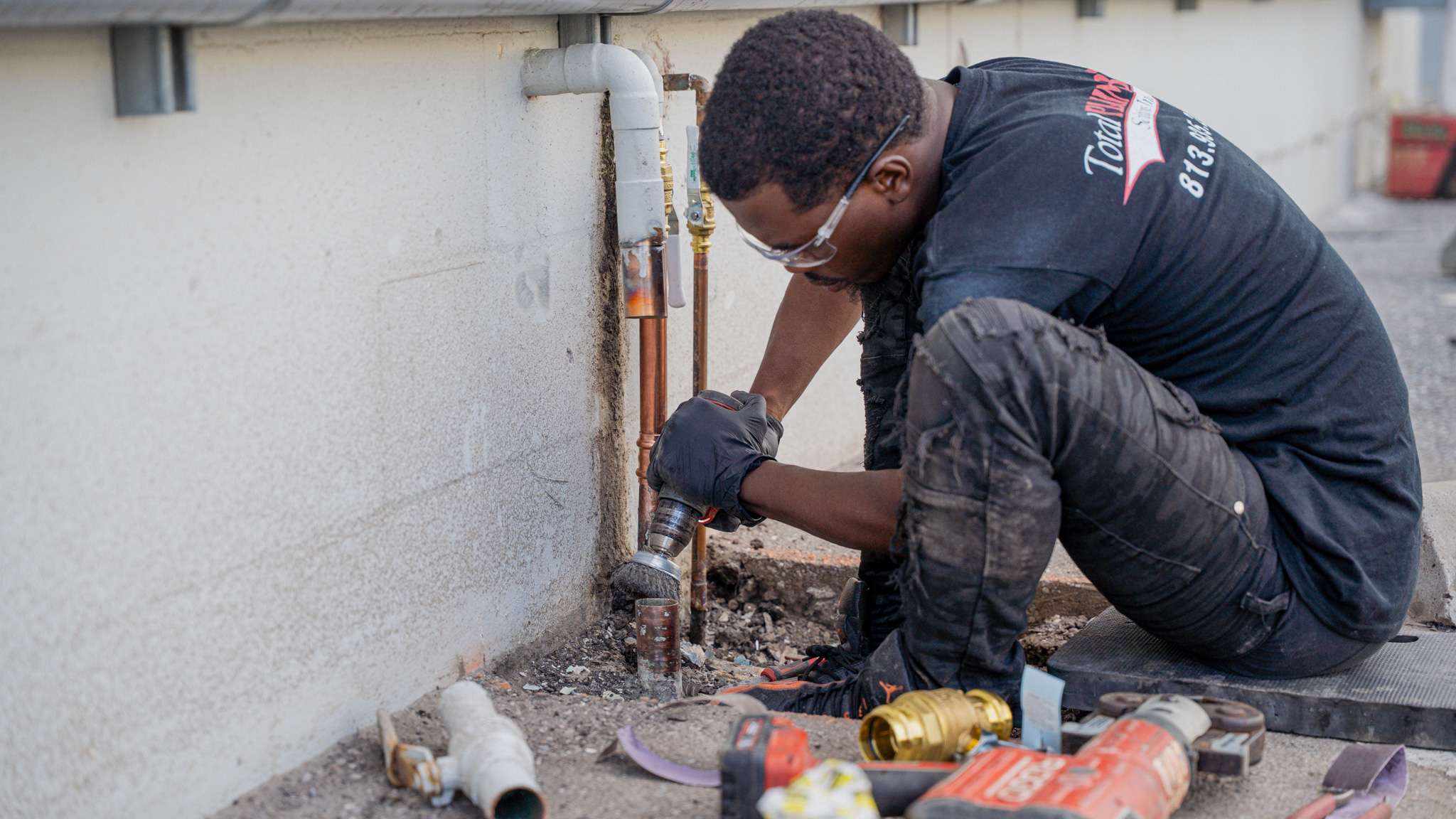
As we settle into January in Florida, many homeowners assume winter issues aren’t a concern here. While our climate is milder than northern states, cooler temperatures and seasonal water usage patterns still create unique plumbing challenges that can lead to inconvenient or costly repairs if left unaddressed.
Whether you’re in Tampa, St. Petersburg, Lutz, Wesley Chapel, Clearwater, or New Port Richey, these tips can help you avoid common winter plumbing problems and keep your system running smoothly all season long — because prevention beats a late‑night emergency call.
 1. Pipes & Outdoor Faucets Are Still Vulnerable
Even brief cold snaps can put stress on exposed pipes, especially those in garages, crawlspaces, or exterior walls. Cold temperatures can cause pipes to contract and potentially crack, which could lead to leaks or water damage later on.
What to do:
- Add foam insulation or heat tape to exposed pipes.
- Cover outdoor faucets and disconnect garden hoses.
- Check service lines in unheated areas of your home.
These small steps help minimize the risk of cracks and leaks — and keep water flowing when you need it most.
 2. Water Heaters Work Harder in Cool Weather
When the air temperature drops, your water heater has to run longer to deliver warm water for showers, laundry, and dishes. This extra workload can reveal weak components or sediment buildup that might otherwise go unnoticed.
Pro Tips:
- Set your water heater to about 120°F for efficiency and comfort.
- Flush the tank annually to remove mineral buildup that decreases efficiency and shortens unit life.
- Test pressure relief valves and expansion tanks to avoid leaks or failure.
A well‑tuned heater reduces energy costs and helps prevent mid‑season breakdowns.
 3. Slow Drains Are More Common in Cooler Weather
In winter, grease and oils from cooking solidify faster in cooler pipes, turning common kitchen waste into stubborn clogs. This can lead to slow drains or backups that need professional attention.
Tips to avoid slow drains:
- Avoid pouring grease or oil down the sink.
- Run hot water after dishwashing to keep pipes warmer.
- Use drain strainers to catch hair and debris.
If clogs persist, professional hydro‑jetting can clear deeper blockages safely and efficiently.
 4. Maintain Consistent Indoor Temperatures
Keeping your home at a steady temperature — even at night — reduces the risk of pipe contraction and freezing in cooler areas like garages or crawl spaces.
Bonus tip: Open cabinet doors under sinks on exterior walls to let warm indoor air circulate around pipes.
 5. Know When to Call in the Pros
Some issues are easy to prevent, but others — like hidden leaks, low water pressure, or sewer line slowdowns — require professional diagnosis and repair. Total Plumbing Solutions offers:
 24/7 emergency service Professional leak detection & repair Water heater maintenance & upgrades Drain cleaning & hydro‑jetting Pipe repairs & repiping Water line service
If you notice unusual noises in your pipes, reduced water flow, or persistent clogs, it’s smarter to get ahead of the problem than wait for a small issue to become a costly repair.
Winter Plumbing Checklist — At a Glance
Insulate vulnerable pipes Disconnect hoses & cover faucets Flush & check your water heater Avoid grease in drains Maintain steady indoor temps Call total plumbing at the first sign of trouble
Stay warm and prepared this season.
Call Total Plumbing Solutions at (813) 935‑2733 to schedule winter‑ready maintenance, inspections, or emergency service anywhere in Hillsborough, Pinellas, and Pasco Counties.